Quick Answer
A DISAB vacuum is a high-powered industrial vacuum system used to safely remove, transfer and recover large volumes of dry or wet material from industrial environments. Often mounted on a specialist vacuum truck or tanker, it enables fast, controlled cleaning of silos, quarries, storage vessels, conveyors and other difficult-to-access areas while reducing manual handling and operational disruption.
If you’ve searched for industrial vacuum cleaning or vacuum tanker services, you may already have come across the term DISAB vacuum.
But what exactly is a DISAB vacuum, how does it work and why is this specialist equipment used throughout industries such as quarrying, manufacturing, recycling and bulk material handling?
In this guide, we explain how DISAB vacuum systems work, where they are used, the materials they can handle and the advantages they offer over traditional industrial cleaning methods.
How Does a DISAB Vacuum Tanker Work?
DISAB technology uses powerful vacuum pumps to generate high airflow capable of lifting and A DISAB vacuum uses powerful vacuum pumps to generate the high airflow required to lift and transport industrial material through flexible hoses and into a sealed collection tank.
The process is straightforward:
- Powerful vacuum pumps generate suction and airflow.
- Flexible hoses collect material directly from the work area.
- The material travels through the hose into the vacuum truck’s collection tank.
- The collected material is safely discharged, disposed of or recovered for reuse where appropriate.
Depending on the equipment and application, a DISAB vacuum can be used to:
- remove dust and fine powders;
- clear blocked systems;
- empty silos and storage vessels;
- recover valuable material;
- remove industrial spillages;
- support planned maintenance shutdowns.
This provides a faster and more controlled alternative to manually sweeping, shovelling and loading large volumes of industrial material.
What Is a DISAB Vacuum Tanker?
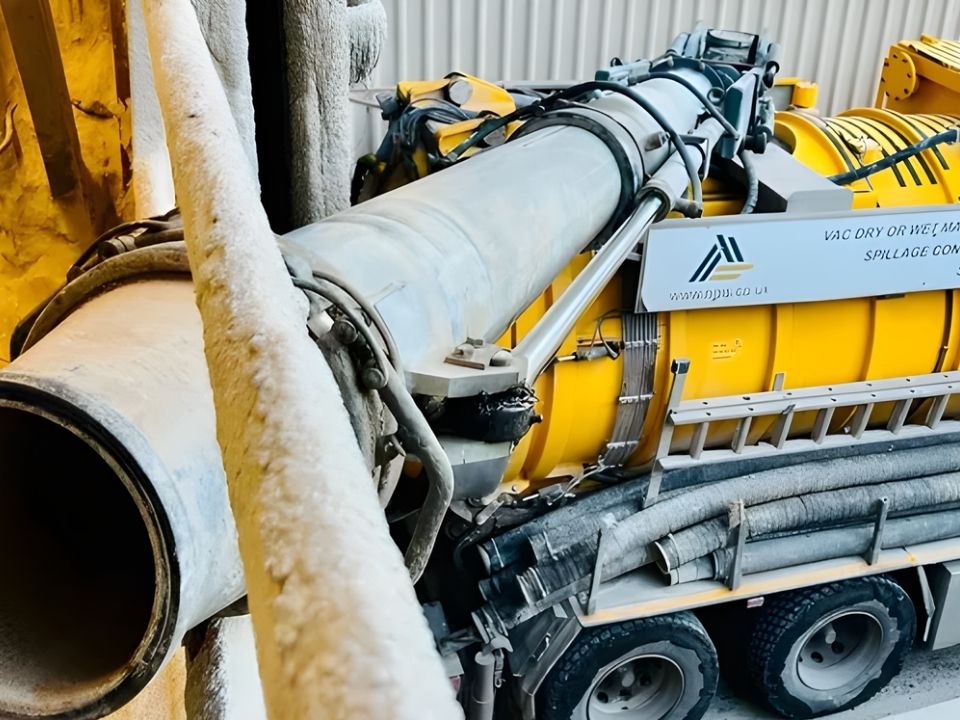
A DISAB vacuum truck is a specialist vehicle fitted with high-powered industrial vacuum equipment and a large collection tank.
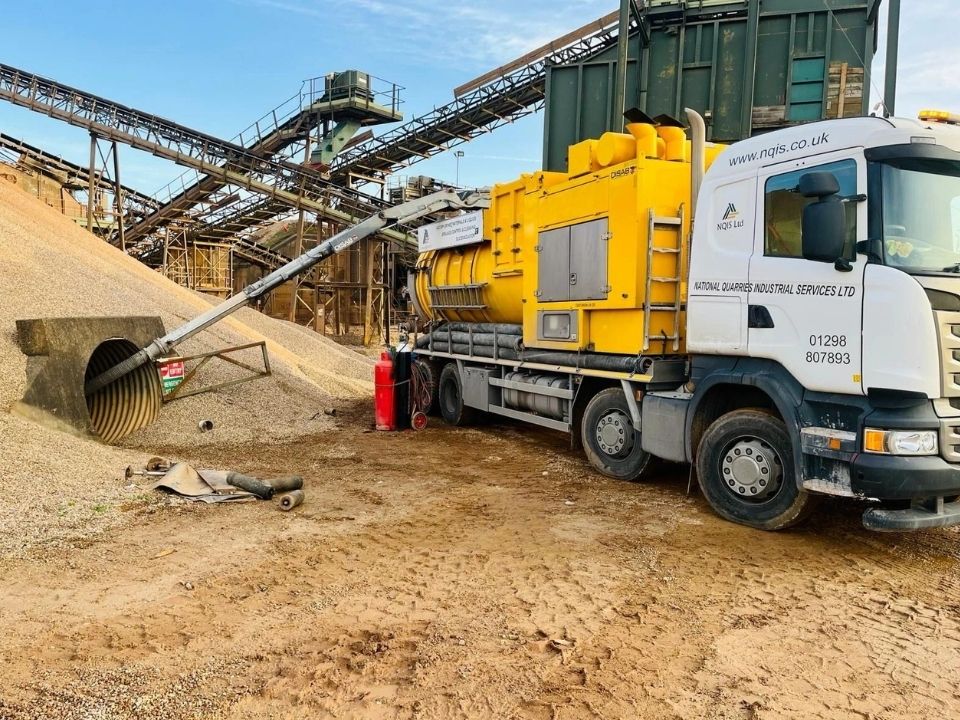
These mobile units are designed for demanding industrial environments and can operate across large sites where the material is difficult to access or conventional cleaning machinery cannot be used.
Flexible vacuum hoses can be extended from the truck into silos, around production equipment, beneath conveyors and across different levels of an industrial facility.
This makes DISAB vacuum trucks particularly useful for:
- planned shutdown cleaning;
- emergency industrial cleaning;
- major spillages;
- silo emptying;
- blockage clearance;
- quarry housekeeping;
- material recovery.
The terms DISAB vacuum truck and DISAB vacuum tanker are often used interchangeably. In both cases, they generally refer to a mobile industrial vacuum unit capable of collecting and transporting substantial quantities of material.
NQIS provides specialist vacuum tanker hire and operated DISAB services for industrial sites throughout the UK.
Is DISAB a Brand?
Yes. DISAB is a recognised manufacturer of industrial vacuum systems, mobile vacuum units and specialist vacuum trucks.
However, within many industries, the name “DISAB” has also become closely associated with this wider category of high-powered industrial vacuum equipment.
Technically, not every industrial vacuum truck is manufactured by DISAB. In the context of NQIS’s services, DISAB refers to the specialist vacuum equipment operated within its fleet.
What Materials Can a DISAB Vacuum Tanker Remove?
One of the main advantages of a DISAB vacuum is its versatility.
Depending on the specification of the equipment and the requirements of the project, DISAB vacuum systems can remove a wide range of dry and wet industrial materials.
| Material | Typical Environment |
|---|---|
| Dust and fine powders | Manufacturing and processing plants |
| Cement and clinker | Cement production facilities |
| Sand and aggregates | Construction and quarry operations |
| Quarry waste | Quarrying and mineral extraction |
| Ash and process residues | Industrial processing and power generation |
| Wet sludge | Manufacturing and wastewater processes |
| Industrial spillages | Heavy industrial and manufacturing sites |
| Recyclable materials | Recycling and material recovery facilities |
This flexibility allows one vacuum system to support multiple cleaning, maintenance and material-handling activities across an industrial site.
The exact suitability of the equipment must be assessed against the material being removed, particularly where hazardous, combustible or contaminated products are involved.
Industries That Use DISAB Vacuum Tankers
DISAB vacuum systems are commonly used throughout:
- Quarrying
- Manufacturing
- Cement production
- Waste and recycling
- Bulk storage facilities
- Ports and terminals
- Chemical processing
- Power generation
- Food manufacturing
- Heavy industrial plants
They are particularly valuable in industries where substantial quantities of dust, powder, aggregate, sludge or process residue need to be removed safely and efficiently.
Unlike conventional portable vacuums, DISAB vacuum trucks provide the power, hose reach and collection capacity required for demanding industrial projects.
Common Uses for a DISAB Vacuum Tanker
Quarry Cleaning
Quarries generate substantial volumes of dust, stone fines and spilled aggregate.
If this material is allowed to accumulate, it can obstruct access, affect equipment performance and make inspection and maintenance work more difficult.
A DISAB vacuum provides an effective way to remove accumulated material from:
- conveyors;
- crushers;
- screening plants;
- transfer points;
- storage areas;
- surrounding infrastructure.
The mobility and hose reach of a DISAB vacuum truck make it particularly suitable for large quarry sites where material may be distributed across several operating areas.
Silo Cleaning and Emptying
Material build-up inside a silo can reduce usable storage capacity, restrict product flow and contribute to blockages.
A DISAB vacuum tanker can be used to remove loose material from the silo and recover suitable product before more intensive cleaning begins.
This helps reduce the volume of material inside the vessel, making subsequent silo cleaning safer and more efficient while also supporting mechanical or non-entry cleaning methods.
Where product has compacted or hardened against the silo walls, vacuum removal alone may not be sufficient and can be combined with specialist equipment such as a Gyro Whip to complete the cleaning process.
Industrial Housekeeping
Good industrial housekeeping is about more than maintaining appearances.
Accumulated dust and debris can:
- restrict access;
- obscure equipment;
- contribute to slip and trip hazards;
- affect machinery;
- increase the difficulty of maintenance work.
Regular industrial cleaning services help remove this material before it becomes a more significant operational problem.
DISAB vacuum systems are particularly useful where the volume of debris is too great for conventional cleaning equipment or where the material is located beneath or around fixed machinery.
Blockage Clearance
Material bridging, compacted product and process issues can cause blockages within silos, hoppers, conveyors and other bulk-handling systems.
A DISAB vacuum may be used to extract loose material around the obstruction or remove the blockage itself where the site conditions and material allow.
This provides a controlled alternative to manually digging or shovelling material from the affected system.
Some blockages will still require additional mechanical cleaning equipment, particularly where the product has become heavily compacted.
Industrial Spillage Removal
Large spillages of powder, aggregate, sludge or process material can disrupt operations and create safety concerns.
A DISAB vacuum allows the spilled material to be collected directly into a sealed tank rather than being manually swept, loaded and transported across the site.
Depending on the material and its condition, it may then be:
- transferred elsewhere on site;
- recovered for reuse;
- transported for recycling;
- disposed of through an appropriate waste route.
Planned Shutdown Cleaning
Planned maintenance shutdowns provide an opportunity to clean equipment and areas that may be difficult to access during normal production.
A DISAB vacuum can remove accumulated material from conveyors, processing equipment, storage areas and plant infrastructure before inspection or maintenance work begins.
Because large volumes can be collected directly into the vacuum tanker, the equipment can help reduce the time spent manually loading and moving material during a restricted shutdown window.
Material Recovery
Not everything removed by a DISAB vacuum necessarily needs to be treated as waste.
Where material remains suitable, it may be recovered and:
- returned to the production process;
- transferred into another storage vessel;
- separated for recycling;
- reused elsewhere on site.
The feasibility of material recovery depends on factors such as contamination, moisture content, product condition and the discharge capabilities of the vacuum equipment.
What Are the Benefits of Using a DISAB Vacuum?
Faster Industrial Cleaning
DISAB vacuum systems can remove large quantities of material more quickly than traditional sweeping, shovelling and manual loading methods.
Reduced Downtime
Cleaning and maintenance work can often be completed more efficiently, helping equipment or operational areas return to service sooner.
Reduced Manual Handling
Material is transported through the vacuum hose directly into the collection tank, reducing the amount of lifting, carrying and manual loading required.
Better Dust Control
Vacuum equipment captures material directly through the hose rather than disturbing it through sweeping or shovelling.
This can help limit the amount of fine dust released into the surrounding work area, although the effectiveness will depend on the equipment, filtration and working method used.
Access to Difficult Areas
Flexible hoses allow operators to collect material from beneath conveyors, around machinery, inside vessels and from other locations conventional cleaning equipment may struggle to reach.
High Collection Capacity
The large collection tanks fitted to DISAB vacuum trucks make them suitable for projects involving substantial volumes of industrial material.
Material Recovery
Where appropriate, suitable material can be collected cleanly and transferred for reuse rather than automatically being disposed of as waste.
DISAB Vacuum Tankers vs Traditional Cleaning Methods
| DISAB vacuum cleaning | Traditional industrial cleaning |
|---|---|
| High-powered vacuum removal | Manual shovelling and sweeping |
| Captures dust at source | Dust often becomes airborne |
| Faster project completion | Labour intensive |
| Reduced manual handling | Greater physical effort |
| Less operational downtime | Longer shutdown periods |
A DISAB vacuum is not automatically the right solution for every industrial cleaning task.
Manual methods may still be appropriate for small, localised areas where the quantity of material does not justify mobilising specialist vacuum equipment.
DISAB vacuum services provide the greatest value where there are substantial material volumes, access difficulties, dust-control requirements or limited operational time available.
NQIS’s Investment in DISAB Vacuum Equipment
At NQIS, we continue to invest heavily in our DISAB fleet to ensure customers have access to the latest industrial vacuum technology.
Since April 2025, we’ve added three new trucks to our fleet, increasing capacity and strengthening our ability to respond quickly to both planned maintenance projects and emergency call-outs.
Our latest addition is the LN20 Centurion, a powerful and versatile unit designed to deliver exceptional performance across a wide range of industrial cleaning applications.
This ongoing investment reflects our commitment to providing reliable, efficient and industry-leading vacuum tanker services throughout the UK.
Looking for DISAB Vacuum Services?
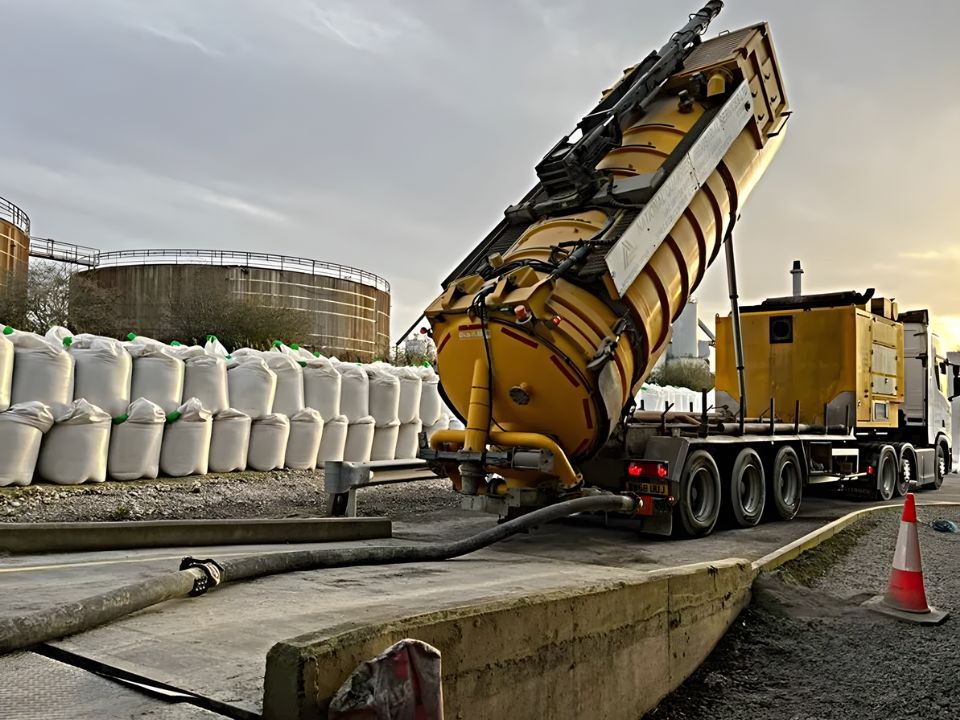
Whether you need support with industrial cleaning, silo emptying, quarry cleaning, blockage clearance or planned shutdown work, a DISAB vacuum provides a fast and controlled method of removing large quantities of industrial material.
NQIS operates a modern fleet of specialist DISAB vacuum tankers backed by experienced operators who understand the practical challenges faced by quarries, factories and other heavy industrial sites.
We can assess:
- whether other cleaning equipment may also be needed.
- the type and condition of the material;
- the approximate volume requiring removal;
- site and vehicle access;
- the required hose distance;
- the intended disposal or recovery route;
Need Specialist DISAB Vacuum Services?
Whether you’re planning routine maintenance, dealing with a blocked silo or conveyor, or require emergency industrial cleaning, our experienced team is ready to help. NQIS operates a modern fleet of specialist DISAB vacuum trucks, delivering fast, safe and efficient material-removal services for industrial sites across the UK.
Discuss Your ProjectFrequently Asked Questions
Ready to get started?
If you have any questions about any of our services, feel free to request a FREE quote using our simple quote request form. Once we’ve received your message, one of our friendly team members will get in touch shortly to discuss your requirements in detail.


