Baghouse Differential Pressure: Causes, Warning Signs and Solutions
When extraction weakens at a quarry transfer point or dust starts escaping around processing equipment, the baghouse differential pressure reading is a useful starting point. It can help explain whether resistance through the filters has increased, airflow has changed or something needs closer investigation.
However, the number needs context. Understanding the trend, operating conditions and other symptoms helps maintenance teams identify the cause rather than replace filter bags unnecessarily.
What is baghouse differential pressure?
Differential pressure, often shortened to DP, is the difference in pressure between the dirty-air and clean-air sides of a baghouse. Also called baghouse pressure drop, it indicates the resistance to airflow between those measurement points, including the filter media and accumulated dust.
A differential pressure gauge or transmitter measures this difference through connections to both sides. Readings may be displayed in pascals, millimetres of water gauge or inches of water gauge.
There is no universally correct bag filter differential pressure. The expected range depends on the equipment, airflow, filter media, dust and cleaning system. Compare readings with the manufacturer’s guidance and the system’s established performance under similar operating conditions.
What is a normal baghouse differential pressure?
There is no single normal differential pressure reading for every baghouse. The expected range depends on the equipment, filter media, airflow, dust loading and cleaning system. A reading that is acceptable on one installation may indicate a problem on another.
Start with the manufacturer’s recommended operating range and compare readings with the system’s established performance under similar conditions. Look at how pressure changes during normal operation and cleaning cycles, rather than relying on an isolated reading.
A sustained change from the usual range can be more useful than the number itself, particularly when accompanied by reduced extraction performance or other warning signs.
What causes high differential pressure?
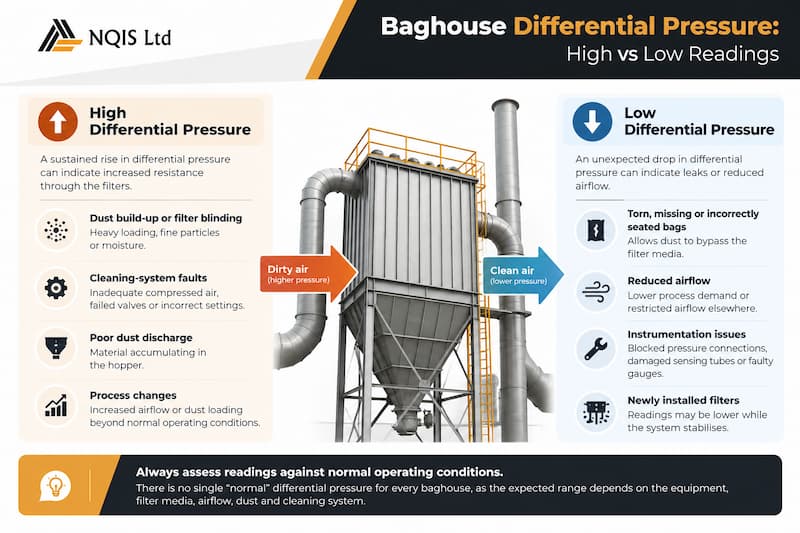
A sustained rise can indicate that dust is creating excessive resistance across the filters.
Common causes include:
- Dust build-up or filter blinding. Heavy loading, fine particles or moisture can produce deposits that routine cleaning cannot adequately remove.
- Cleaning-system faults. On pulse-jet systems, inadequate compressed-air supply, failed valves or incorrect controller settings can leave bags insufficiently cleaned.
- Poor dust discharge. Material accumulating in the hopper can interfere with operation and allow dust to be picked up again.
- Process changes also matter. Increased airflow or dust loading may push a previously stable system beyond its normal operating conditions.
- High resistance can reduce extraction airflow if the fan cannot overcome it. At a cement plant, for example, this may mean less effective dust capture at a conveyor transfer point.
- Check where the restriction sits. A blocked duct or closed damper can reduce airflow without producing high DP across the filters. Poor suction alone does not prove the bags are blocked.
What does low differential pressure indicate?
An unexpected drop can indicate torn, missing or incorrectly seated bags, or another pathway allowing dust to bypass the filter media. Dust on the clean side or increased outlet emissions strengthens that concern.
However, low differential pressure does not always indicate a leak. Reduced airflow, lower process demand or newly installed filters may also explain a lower reading. A blocked pressure connection, damaged sensing tube or faulty instrument can mislead operators too. Verify an unusual reading before deciding what work is required.
Warning signs of baghouse performance problems
Read pressure trends alongside what is happening on the plant. Warning signs include:
- Reduced suction at extraction points or poorer dust capture.
- A persistent rise, sudden drop or unexplained change in DP.
- Cleaning cycles that become more frequent or fail to restore normal readings.
- Dust in the clean-air chamber or visible particulate emissions.
For example, a gradual increase during unchanged production suggests a different investigation from a sudden drop accompanied by dust carryover. Visible emissions require prompt investigation under site procedures; an apparently normal DP reading does not rule out a leak.
How to address differential pressure problems
Start by checking the gauge, pressure taps and sensing lines. Then compare readings with recent changes in throughput, fan operation, dampers, temperature and moisture.
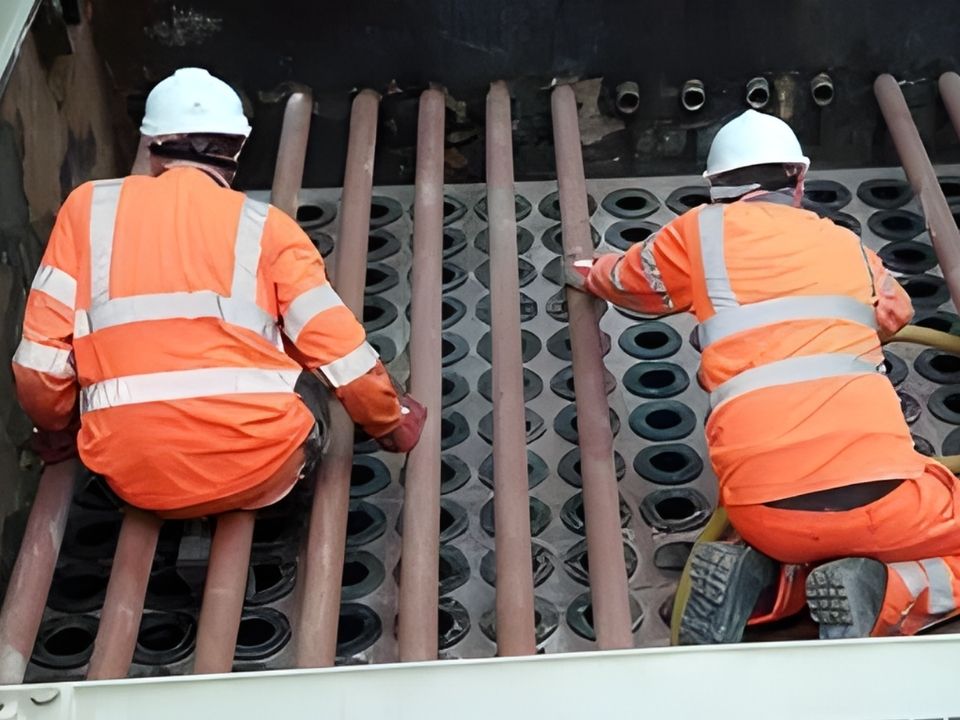
Review cleaning-system performance and dust discharge before assessing bags, cages and seals. Plan internal inspections around appropriate isolation and safe access procedures.
The solution may be a cleaning-system repair, removal of accumulated material, specialist cleaning or targeted replacement of damaged components. Replacement bags may be necessary where media is damaged or cannot be restored to suitable performance.
NQIS’s Bag Filter Maintenance & Cleaning service includes differential pressure assessment, inspections, cleaning and troubleshooting. Where leakage is suspected, dye testing can help locate the problem. For ongoing support, the Bag Filter Care Plan brings condition checks and pressure, airflow and cleaning-system reviews into a planned programme, helping teams act on developing problems.
Ready to get started?
If you have any questions about any of our services, feel free to request a FREE quote using our simple quote request form. Once we’ve received your message, one of our friendly team members will get in touch shortly to discuss your requirements in detail.


