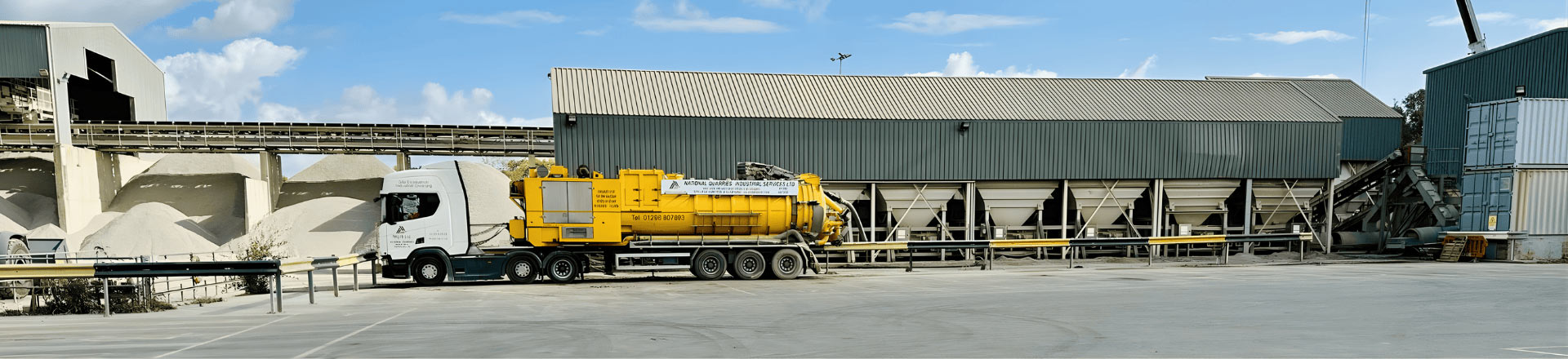
Frequently Asked Questions

NQIS delivers specialist industrial cleaning, vacuum tanker hire, silo cleaning, civils, groundworks, building and maintenance services across the UK. Below are answers to common questions about our services. If you have a specific question, don’t hesitate to get in touch with us by using the contact details below.

Vacuum Tanker Hire / Disab

Do you offer emergency vacuum tanker hire near me?

Yes – we provide emergency vacuum tanker hire across the UK, including same-day response where availability allows. Whether it is a spill, blocked tanker suction line, process shutdown or environmental incident, our team can be mobilised rapidly to your location. Contact us 24/7 with your postcode and site details to arrange emergency assistance.

What is the difference between a DISAB vacuum tanker and standard vacuum units?

NQIS use DISAB vacuum tanker (from DISAB Vacuum Technologies), specifically engineered for high performance, high capacity industrial jobs, typically featuring:

  • Superior suction power for heavy, viscous or solid-laden waste
  • High throughput filtration systems
  • Remote-control operation options
  • Enhanced reliability in continuous use environments
Standard vacuum units are typically smaller, less powerful and designed for general waste removal tasks. DISAB units are ideal for major industrial cleaning, plant shutdowns and challenging waste types.

Can a vacuum tanker remove wet and dry industrial waste?

Yes. Our vacuum tankers are designed to handle both wet and dry waste streams, including:

  • Sludges and liquids
  • Powders, dusts and debris
  • Inert solids
  • Slurries
They use water flushing, agitation and high-volume suction to safely remove and transport mixed waste types in a single operation.

Is vacuum tanker hire suitable for quarry clean-ups?

Absolutely. Vacuum tankers are widely used for quarry cleaning, such as:

  • Removing wet slurry and fines
  • Clearing silted drainage channels
  • Extracting mud build-up from haul roads
  • Cleaning settlement ponds and sumps
Their reach and power make them ideal for tough, abrasive and high-volume materials found on quarry sites.

How quickly can you mobilise a vacuum tanker to site?

Mobilisation times depend on tanker availability and your location. In many cases we can deploy a unit within 2–6 hours of your booking. For urgent or emergency call-outs, we aim to mobilise to site as quickly as operationally possible and will give you a realistic ETA when you call.

Bag Filter Maintenance and Cleaning

How often should industrial bag filters be inspected or replaced?

Industrial bag filters should typically be visually inspected every 3-6 months, with a more detailed performance review (including differential pressure readings and airflow testing) carried out at least annually. Replacement frequency depends on:

  • Dust loading and particle characteristics
  • Operating temperature and moisture levels
  • Cleaning system performance (pulse-jet effectiveness)
  • Fabric type (polyester, aramid, PTFE, etc.)
In many industrial environments, filter bags last 24–48 months, but high-abrasion or high-temperature applications may shorten service life significantly. Monitoring differential pressure trends is the most reliable indicator of when replacement is required.

What are the signs a bag filter system is failing?

Common indicators of bag filter failure include:

  • Rising differential pressure (ΔP) across the filter housing
  • Visible dust emissions from stacks or duct joints
  • Reduced airflow at extraction points
  • Increased dust accumulation inside the clean air plenum
  • Frequent pulse cleaning cycles
  • Damage such as split bags or failed cage supports
Ignoring these signs can reduce system efficiency, increase energy consumption and create compliance risks.

How do you diagnose pulse-jet cleaning system faults?

We diagnose pulse-jet faults through a structured inspection and performance testing process, including:

  • Checking differential pressure (ΔP) trends
  • Inspecting pulse valves, diaphragms and solenoids
  • Testing compressed air supply pressure and quality
  • Verifying timer/controller sequencing
  • Inspecting blow tubes for misalignment or blockage
  • Checking venturis and bag seating
Common faults include split diaphragms, insufficient air pressure, moisture contamination in airlines and incorrect pulse timing. Where required, we conduct live system testing to confirm cleaning efficiency before and after repairs.

Can you carry out airflow testing and LEV verification?

Yes. We provide airflow measurement, system balancing and LEV (Local Exhaust Ventilation) testing in accordance with HSE guidance (such as HSG258). Our services include:

  • Air volume and velocity measurements
  • Hood capture efficiency testing
  • Static pressure readings
  • Fan performance checks
  • Smoke testing for leakage or poor capture
  • Compliance reporting and documentation
This ensures your dust extraction system remains legally compliant and operating at design performance levels.

Do you supply replacement filter bags and cages to OEM specification?

Yes. We supply and install replacement filter bags and cages manufactured to OEM specifications, including:

  • Correct fabric type (polyester, aramid, PPS, PTFE, etc.)
  • Appropriate micron rating
  • Temperature resistance
  • Anti-static or ATEX-compliant materials
  • Custom dimensions and top/bottom configurations
Where beneficial, we can also recommend upgraded media to improve efficiency, longevity or chemical resistance.

How do you manage combustible dust risks during maintenance?

Combustible dust environments require strict control measures. We implement:

  • Full site-specific risk assessments and RAMS
  • Isolation and lock-out/tag-out procedures
  • ATEX-compliant tools and equipment where required
  • Dust suppression and controlled cleaning methods
  • Continuous monitoring for ignition sources
  • Strict housekeeping during and after works
Where necessary, we coordinate with site safety teams to ensure compliance with DSEAR regulations and minimise explosion risk.

Can you upgrade existing baghouses to improve filtration efficiency?

Yes. We regularly upgrade legacy baghouse systems to enhance performance and energy efficiency. Upgrades may include:

  • Installing high-efficiency filter media
  • Converting to improved pulse-jet systems
  • Retrofitting modern controllers and DP monitoring
  • Upgrading seals and access doors to reduce leakage
  • Optimising air-to-cloth ratios
  • Improving hopper discharge systems
These upgrades can reduce emissions, lower energy consumption and extend filter life.

Do you offer condition monitoring or preventative maintenance contracts?

Yes. We provide structured preventative maintenance programmes tailored to your operational requirements. These can include:

  • Scheduled inspections
  • Differential pressure trend analysis
  • Pulse system servicing
  • Bag integrity checks
  • Airflow verification
  • Compliance documentation
Condition monitoring helps identify early signs of failure, reducing unplanned downtime and extending asset life.

Are your operatives qualified to work at height on filtration systems?

Yes. Our operatives are trained and certified for:

  • Working at height (including MEWP and harness use)
  • Confined space entry (where required)
  • Abrasive and combustible dust environments
  • ATEX awareness (if applicable)
  • IOSH or equivalent health and safety standards
All works are conducted under RAMS, with permit-to-work procedures followed on site.

Do you offer emergency dust extraction repairs?

Yes. We provide emergency response for:

  • Torn or failed filter bags
  • Pulse valve or solenoid failures
  • Sudden pressure spikes
  • Emission breaches
  • System airflow collapse
Where possible, we aim for rapid mobilisation to minimise downtime and restore safe operating conditions.

Silo Cleaning

Can you remove hardened material from inside a silo?

Yes. We remove hardened build-up using:

  • Specialist mechanical agitation tools
  • Industrial vacuum systems
  • Controlled breaking and extraction methods
  • High-pressure techniques where appropriate
The method selected depends on material type (cement, fly ash, biomass, aggregates, etc.) and structural considerations.

Is silo cleaning possible without man entry?

In many cases, yes. We use:

  • Remote mechanical cleaning systems
  • Vacuum extraction
  • External access and controlled discharge techniques
Non-entry methods significantly reduce confined space risk and minimise downtime. However, severe blockages may occasionally require confined space entry under strict safety controls.

How long does industrial silo cleaning take?

Cleaning duration depends on:

  • Silo size and design
  • Type and volume of blockage
  • Material characteristics
  • Accessibility
Minor flow restrictions may be resolved within hours, while heavily compacted or full blockages can take several days.

Do you offer emergency silo blockage clearance?

Yes. We provide rapid response silo unblocking services to restore material flow and minimise production downtime. Emergency call-outs are available for urgent discharge failures or critical plant stoppages.

Do you provide confined space silo cleaning?

Yes. All confined space entries are carried out by trained personnel under permit systems with full rescue planning and atmospheric monitoring.

What causes silo blockages and bridging?

Silo blockages are typically caused by:

  • Moisture ingress leading to material compaction
  • Fine powders forming stable arches (bridging)
  • Rat-holing due to poor flow characteristics
  • Inconsistent material size
  • Inadequate discharge design
  • Temperature fluctuations causing condensation
Over time, these issues restrict flow and can completely stop discharge.

Plant & Machine Operator Hire

What is machine operator hire in the UK?

Machine operator hire is the supply of fully trained and certified operatives to safely operate plant and equipment on your site. This can include forklift truck drivers, IPAF operators, telehandler drivers, dumper operators and bobcat / skid steer drivers. At NQIS, we provide flexible machine operator hire services across the UK to suit your needs, including operator-only hire where you supply the machinery, operator with machine hire, or fully managed works where we deliver the job in full.

What types of plant and machine operators can you hire?

We supply a wide range of qualified plant and machine operators for industrial and construction sites across the UK, including: B1 & B2 Forklift Truck (FLT) drivers IPAF-trained operators for MEWPs and access platforms Telehandler operators Dumper drivers (rigid and articulated) Bobcat / skid steer operators All operatives are experienced in high-risk environments such as quarries, waste-to-energy facilities and manufacturing sites, ensuring safe and efficient delivery of your project requirements

Are your machine operators fully trained and certified in the UK?

Yes. All NQIS machine operators are fully trained, licensed and certified to operate specific plant and equipment safely. Our operatives hold recognised industry qualifications such as IPAF, NPORS, MPQC / MPConnect, forklift licences, telehandler and dumper certifications, along with training in confined space, working at height and site safety awareness. They are also experienced in working under RAMS, permit systems and site-specific procedures, ensuring full compliance with UK HSE regulations and industry standards.

How quickly can you provide machine operator hire near me?

We provide machine operator hire across the UK, with fast mobilisation depending on availability, location and the type of operator required. In many cases, we can supply operators at short notice, including rapid response for urgent or reactive works. For planned projects, operators are scheduled in advance to align with your programm

Industrial Cleaning Services

What industries does NQIS provide industrial cleaning services for?

We provide industrial cleaning services across the UK for quarries, recycling facilities, waste transfer stations, concrete plants, manufacturing sites, asphalt plants and heavy industrial operations.

Do you support planned shutdown and maintenance cleaning?

Yes. We provide industrial cleaning teams during planned shutdowns, ensuring safe access, dust control and efficient plant restart.

What is included in a full industrial plant clean-down?

A full industrial plant clean-down typically includes:

  • Removal of dust, fines, slurry and material build-up
  • Cleaning of conveyors, rollers and return belts
  • Crusher house and screen deck cleaning
  • Sump and drainage clearance
  • Structural steel and walkway cleaning
  • Vacuum removal of hazardous or nuisance dust
  • Waste segregation and safe disposal
Where required, vacuum tankers, mechanical equipment and manual cleaning teams are deployed to restore safe access and operational efficiency.

How often should quarry plant be professionally cleaned?

Cleaning frequency depends on production levels, material type and environmental conditions. As a general guide:

  • High-output quarries may require weekly or fortnightly maintenance cleaning
  • Full plant clean-downs are often scheduled quarterly or during planned shutdowns
  • Sumps and high-build-up areas may require more frequent attention
Regular cleaning reduces unscheduled downtime and improves overall plant reliability.

Do you provide confined space industrial cleaning?

Yes. NQIS provides confined space cleaning services in accordance with current safety regulations. This includes:

  • Sumps
  • Tanks
  • Hoppers
  • Silos
  • Enclosed ducting
All works are carried out under permit systems, with trained operatives, atmospheric monitoring and rescue planning in place.

How do you manage dust control during industrial cleaning?

Dust control measures include:

  • Use of industrial vacuum systems instead of dry sweeping
  • Water suppression where appropriate
  • Segregation of work zones
  • Continuous monitoring of airborne dust
  • Controlled waste handling procedures
This minimises secondary contamination and protects both operatives and site personnel.

Can you remove material build-up from hard-to-reach areas?

Yes. Using specialist access equipment, vacuum systems and trained operatives, we can remove build-up from:

  • Elevated conveyor gantries
  • Under-crusher voids
  • Screen housings
  • Behind structural steelwork
  • Confined or restricted spaces
Our approach ensures thorough cleaning without compromising safety or structural integrity.

Do you provide nationwide industrial cleaning services?

NQIS delivers industrial cleaning services across the UK, supporting clients in quarrying, waste management and heavy industry.

Civils, Groundwork & Maintenance

Do you provide planned preventative maintenance (PPM)?

Yes. We offer structured PPM programmes to reduce reactive repairs and extend asset life. This may include scheduled inspections, condition reporting, minor repairs and maintenance planning to prevent costly breakdowns or deterioration.

Can you carry out maintenance in live industrial environments?

Yes. We operate safely within live sites, including quarries and heavy industrial facilities. Works are planned around operational requirements, with risk assessments, method statements and safe segregation of work areas to minimise disruption.

Do you provide roofing and cladding repairs?

Yes. We carry out:

  • Industrial roof repairs
  • Sheet replacement
  • Leak detection and sealing
  • Gutter and downpipe maintenance
  • Wall cladding repairs
Maintaining roofing and cladding systems prevents water ingress, structural damage and internal plant disruption.

How quickly can you respond to emergency building repairs?

We provide reactive building maintenance support for urgent issues such as:

  • Storm damage
  • Roof leaks
  • Structural damage
  • Drainage failures
  • Damaged access routes
Response times depend on location and severity, but urgent cases are prioritised to protect operations and safety.

Do you provide concrete repair services?

Yes. We undertake concrete repairs including:

  • Crack repairs
  • Spalling treatment
  • Joint resealing
  • Surface patching
  • Yard and hardstanding repairs
All repairs are completed using suitable materials for industrial load-bearing environments.

Can building maintenance reduce long-term repair costs?

Yes. Regular maintenance prevents deterioration, reduces emergency call-outs and extends the lifespan of structures and assets.

Do you offer external yard and ground repairs?

Yes. We repair potholes, damaged concrete yards, drainage channels and access roads to maintain safe site conditions.

Are you licensed for asbestos removal?

NQIS is licensed for low-risk asbestos removal in line with regulatory requirements.

What services typically fall under civils and groundworks?

A full civils and groundworks capability typically includes:

  • Site clearance and preparation
  • Bulk earthworks and excavation
  • Foundations and concrete bases
  • Drainage installation (foul and surface water)
  • Kerbing, ducting and service trenches
  • Hardstanding and access roads
  • Reinforced concrete structures
Works are delivered in accordance with engineered drawings, site specifications and industry standards.

Do you provide drainage installation and repairs?

Yes. We install and maintain:

  • Surface water drainage systems
  • Foul drainage networks
  • Attenuation tanks and soakaways
  • Channel drains and interceptors
All systems are installed to current regulations and tested prior to handover.

Do you provide reinforced concrete works?

Yes. We deliver reinforced concrete works including:

  • Foundations and slabs
  • Retaining walls
  • Structural bases
  • Equipment plinths
  • Hardstandings
All concrete works are installed to specification with appropriate reinforcement, shuttering and finishing standards.

Can you undertake projects in live industrial or quarry environments?

Yes. NQIS operates safely within live quarry and industrial settings, coordinating with site management to minimise disruption and maintain operational continuity.

Vacuum tanker cleaning an industrial project
Men working on ground works