What NQIS Considers Before Starting an Industrial Cleaning Project
Industrial cleaning on a quarry or processing plant is rarely a straightforward clean-up.
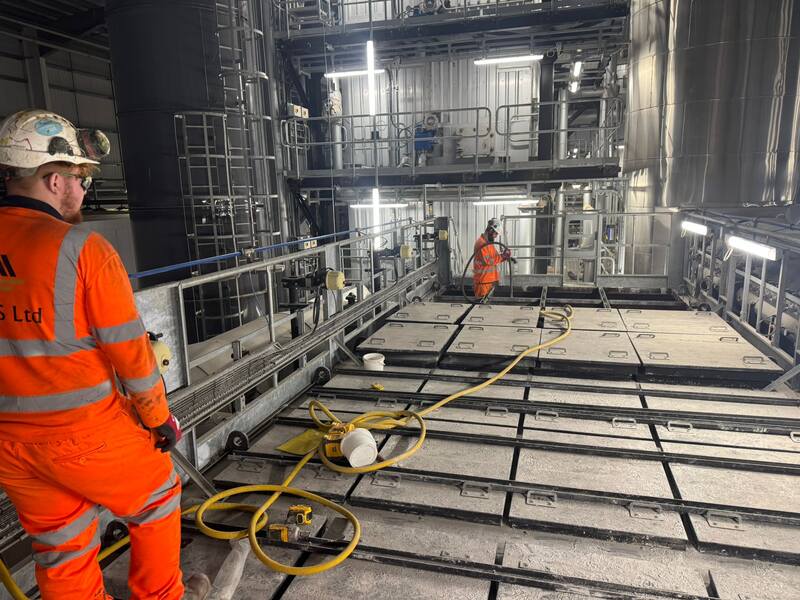
Material may have collected beneath conveyors, around crushers, inside a silo or across areas that are difficult to reach using conventional equipment. The material itself may be loose, wet, dusty, compacted or set solid after exposure to moisture.
The correct approach therefore depends on more than the amount of material present.
NQIS provides industrial cleaning services across quarries, waste-to-energy facilities, manufacturing sites, asphalt plants and other industrial environments. Before larger or more complex projects begin, the team considers the material, access requirements, operational conditions and equipment needed to complete the work safely and efficiently.
Where Has the Material Built Up?
Common Areas We Clean on Quarry & Industrial Sites
Loose fines beneath a conveyor may be suitable for high-capacity vacuum removal. Material that has set solid because of moisture ingress may require mechanical intervention. Cleaning inside a silo or enclosed hopper may also require a specialist system designed around the condition of the vessel.
Understanding where the material is located helps NQIS establish the likely equipment, labour and access requirements.
What Material Needs to Be Removed?
NQIS handles a range of wet and dry industrial materials, including:
- Dust and fines
- Sand and aggregates
- Slurry and liquids
- Powders
- Debris
- Inert solids
- Process waste
- Industrial spillages
- Material that has set or compacted
The physical condition of the material can significantly affect how it is removed.
Loose, free-flowing material may be suitable for a DISAB vacuum tanker. Wet slurry may require a different handling process, while compacted or hardened material may need to be broken down before it can be extracted.
The team will also need to understand whether the material is hazardous, whether dust controls are required and what should happen to it once removed.
Is the Build-Up Loose, Compacted or Set Solid?
Material does not always remain in the condition in which it entered the process.
Moisture ingress can cause some products to bind, harden or cure. Fine materials may form bridges or rat-holes within silos, while repeated overspill beneath plant can become compacted and increasingly difficult to remove.
This distinction helps determine whether vacuum extraction alone is appropriate.
For example, NQIS uses high-capacity vacuum equipment to remove loose and bulk material. Where material has hardened inside a silo, its silo cleaning service may combine a remote Gyro Whip system with vacuum extraction.
The Gyro Whip loosens material from the vessel walls, allowing it to fall to the base or onto the connected conveying system. The released material can then be removed using the vacuum tanker where required.
Is Product Recovery Possible?
Material removed during industrial cleaning is not automatically waste.
Where the product remains viable and uncontaminated, NQIS may be able to recover and return it to the process.
Its DISAB vacuum tankers can:
- Extract bulk material
- Transfer product between tanks
- Tip material for disposal
- Return viable product into the system
This is particularly relevant during silo emptying, bulk product transfer and large-scale material removal.
Recovering suitable product may help reduce disposal requirements and avoid the cost of replacing or reprocessing usable material. The feasibility of this will depend on the material, its condition and the client’s own process requirements.
Can the Work Area Be Accessed Safely?
Access can be one of the main challenges on quarry and industrial sites.
Before mobilisation, NQIS may need to consider:
- Whether a vacuum tanker can reach a suitable position
- The distance and route between the tanker and the material
- Restricted spaces beneath or behind plant
- Elevated conveyor gantries
- Confined-space requirements
- Working-at-height requirements
- Other contractors working nearby
- Site traffic and operational plant
- Permit and isolation requirements
NQIS uses specialist access equipment, vacuum systems and trained operatives to reach areas including elevated gantries, under-crusher voids, screen housings and restricted spaces.
For larger or more complex works, a site visit may be carried out to confirm access and project requirements before the quotation and scope are agreed.
Which Equipment and Cleaning Method Are Required?
NQIS does not rely on a single cleaning method.
Its industrial cleaning capability includes:
- DISAB vacuum tankers
- Industrial vacuum systems
- Gyro Whip silo-cleaning equipment
- Shot blasting and surface-preparation equipment
- 110v tools and generators
- Trained manual cleaning teams
- Hired-in access equipment and compressors where required
The most appropriate combination depends on the location, volume and condition of the material.
How Does the Work Fit Around Site Operations?
Industrial cleaning often takes place while a wider maintenance or operational programme is underway.
NQIS supports:
- Planned shutdowns
- Regular scheduled cleaning
- Breakdown clean-ups
- Emergency spillages
- Reactive call-outs
- Deep cleans following plant downtime
- One-off and longer-duration projects
Cleaning may be required before engineers can inspect equipment, during a planned outage or following a failure that has left material across the working area.
Understanding the client’s timescale allows the work to be scoped around plant access, isolation periods and other site activities.
This is particularly important where multiple contractors are working during a limited shutdown window.
What Happens to the Material After Removal?
The removal method is only part of the project.
NQIS will also need to establish whether the material should be:
- Transferred elsewhere on site
- Returned to the process
- Loaded into another vessel
- Segregated for recovery
- Tipped for disposal
- Removed and disposed of responsibly
The correct arrangement will depend on the material and the agreed scope.
Its vacuum tanker service includes the removal, transfer or disposal of material, with the process agreed following the initial discussion and site assessment where needed.
Safety and Site Requirements
NQIS operates in high-risk and operationally critical environments.
Industrial cleaning work is delivered in line with site-specific risk assessments and method statements, alongside relevant permits, PPE, inductions and site procedures.
Depending on the work, NQIS operatives may hold training or qualifications covering:
- Confined spaces
- Working at height
- IPAF
- MPQC or MPConnect
- NPORS plant operation
- Abrasive wheels
- Manual handling
- CSCS or SPA safety passports
This enables NQIS to adapt its teams and equipment to the requirements of individual quarry and industrial sites.
Planning the Right Industrial Cleaning Solution
A successful industrial cleaning project begins with understanding the site rather than simply choosing a piece of equipment.
The location, material, access conditions, operating programme and required outcome all influence how the work should be delivered.
NQIS provides planned and reactive industrial cleaning support, combining trained operatives with vacuum tankers, industrial vacuum systems, specialist silo-cleaning equipment and wider site-cleaning capability.
To discuss an upcoming clean-down, spillage, plant shutdown or difficult material build-up, contact NQIS to arrange an initial discussion or site assessment.
Frequently Asked Questions
Does NQIS visit the site before every industrial cleaning project?
Not necessarily. NQIS begins with an initial discussion of the scope and requirements. A site visit may then be arranged for larger or more complex projects.
What types of industrial sites does NQIS clean?
NQIS supports quarries, recycling facilities, waste-transfer stations, concrete plants, manufacturing sites, asphalt plants, waste-to-energy facilities and other heavy industrial operations.
Can NQIS remove wet and dry material?
Yes. NQIS vacuum tankers can handle wet and dry material, including slurries, liquids, powders, dust, debris and inert solids.
Can NQIS clean areas beneath conveyors and crushers?
Yes. NQIS provides conveyor cleaning, belt-overspill removal and cleaning around crusher houses, screen decks, under-crusher voids and other restricted plant areas.
Can removed material be returned to the process?
Potentially. Where the material remains viable, NQIS can recover and transfer product or return it to the system. Suitability depends on the material and site requirements.
Does NQIS provide shutdown cleaning?
Yes. NQIS supports planned shutdowns, scheduled cleaning and reactive interventions across quarry and industrial sites.
Ready to get started?
If you have any questions about any of our services, feel free to request a FREE quote using our simple quote request form. Once we’ve received your message, one of our friendly team members will get in touch shortly to discuss your requirements in detail.


